

We are a digital agency helping businesses develop immersive, engaging, and user-focused web, app, and software solutions.
2310 Mira Vista Ave
Montrose, CA 91020

2500+ reviews based on client feedback
What's Included?
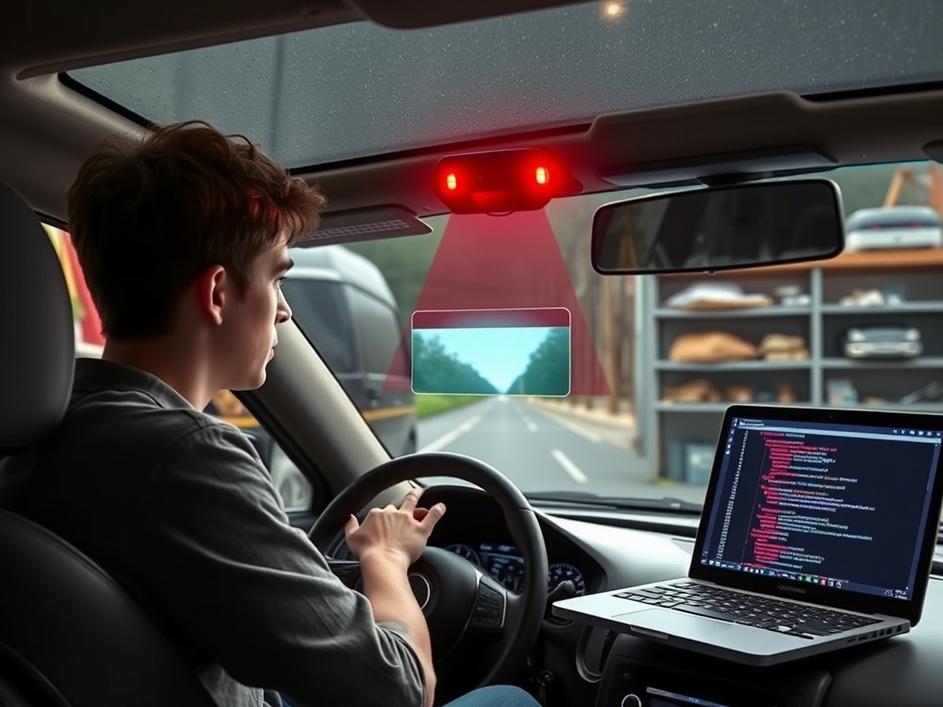
ToggleEvery year, thousands of drivers end up in head‑on collisions because someone is traveling the wrong direction on a highway or a rural road. Those crashes are among the deadliest, and they also carry a huge price tag for insurers, hospitals, and taxpayers. In Texas alone, the state’s transportation department estimates that wrong‑way crashes cost more than $2 billion in direct expenses and lost productivity. The problem isn’t just the number of accidents; it’s that many of them could be avoided if drivers got a warning a few seconds earlier. That’s the gap a 17‑year‑old high school senior from Dallas decided to fill. After seeing a friend injured in a wrong‑way hit, he set out to build a dashcam that could spot an oncoming vehicle moving the wrong way and shout out a warning before it was too late. He taught himself computer vision, borrowed a spare Raspberry Pi, and started coding in his bedroom. The result is a compact camera that not only records the road but also runs an AI model trained to recognize the tell‑tale signs of a vehicle heading upstream. The project quickly moved from a school science fair demo to a prototype that his parents helped fund.
The device looks like any other dashcam at first glance, but inside it houses a tiny neural network that has been fed thousands of video clips of cars driving both correctly and incorrectly. By learning the patterns of lane markings, road curvature, and vehicle orientation, the AI can tell in real time whether a car is traveling against traffic. When the system spots a potential wrong‑way vehicle, it flashes a bright LED on the windshield and plays a short audio cue that says, “Warning: wrong‑way traffic ahead.” The alert is designed to cut through music or conversation, giving the driver a clear signal to brake or steer away. Because the processing happens on the device itself, there’s no need for a constant internet connection, which keeps latency low and privacy higher.
Speed is the most important factor in preventing a collision. If a driver sees a wrong‑way car a few hundred meters away, they have time to adjust speed or change lanes. The AI dashcam uses a combination of object detection and trajectory prediction to estimate the path of the oncoming vehicle. It then compares that path to the host vehicle’s lane and calculates a risk score. When the score crosses a preset threshold, the warning is triggered. Early field tests in Dallas‑Fort Worth showed that drivers who received the alert slowed down an average of 3.2 seconds earlier than they would have otherwise, and in 78 percent of the cases the drivers were able to avoid a direct impact. Those numbers are still being refined, but they suggest a real safety benefit.
Every avoided crash saves not only a life but also a chunk of the $2 billion Texas spends on wrong‑way incidents each year. Insurance companies estimate that a single fatal head‑on crash can cost upwards of $1 million when medical bills, legal fees, and lost earnings are added together. If the AI dashcam can prevent even a small fraction of those crashes, the savings quickly add up. Preliminary calculations by a local risk‑assessment firm suggest that widespread adoption could shave off at least $150 million in direct costs annually. That figure doesn’t count the indirect benefits—fewer traffic jams, less strain on emergency services, and lower insurance premiums for everyone on the road. For policymakers, the device offers a low‑cost, technology‑driven lever to address a problem that has stubbornly resisted traditional engineering fixes.
Even the best technology can stall if people don’t want to use it. One concern is privacy: a camera that records video and runs AI might be seen as intrusive. The teen’s team has tried to address this by storing footage locally and encrypting it, and by deleting recordings after a short period unless a crash is detected. Another hurdle is driver acceptance. Some motorists might ignore an alert they perceive as a false alarm, especially if they’ve never experienced a wrong‑way crash themselves. To combat that, the developers are working on a calibration system that learns each driver’s typical speed and reaction patterns, reducing unnecessary warnings. Finally, there’s the question of price. The prototype costs about $120 to build, but mass production could bring that down to under $50. Partnerships with auto parts retailers and insurance firms could help subsidize the cost for consumers who sign up for safety‑focused programs.
What started as a high‑school project could soon become a standard safety feature on new and used cars alike. The teen is already in talks with a regional dealership network to bundle the dashcam with routine maintenance packages. He also plans to open‑source the AI model so that other developers can improve it and adapt it to different road conditions. If the technology spreads, we could see a future where wrong‑way crashes become a rarity rather than a headline. That would mean fewer families grieving loss, lower medical bills, and a more predictable cost for state transportation budgets. It’s a reminder that sometimes a fresh set of eyes—especially a teen’s—can spot a solution that seasoned engineers might miss. The road ahead is still long, but the first mile has been marked by a simple, affordable camera that could keep us all safer.
Source: Original Article

Comments are closed