

We are a digital agency helping businesses develop immersive, engaging, and user-focused web, app, and software solutions.
2310 Mira Vista Ave
Montrose, CA 91020

2500+ reviews based on client feedback
What's Included?
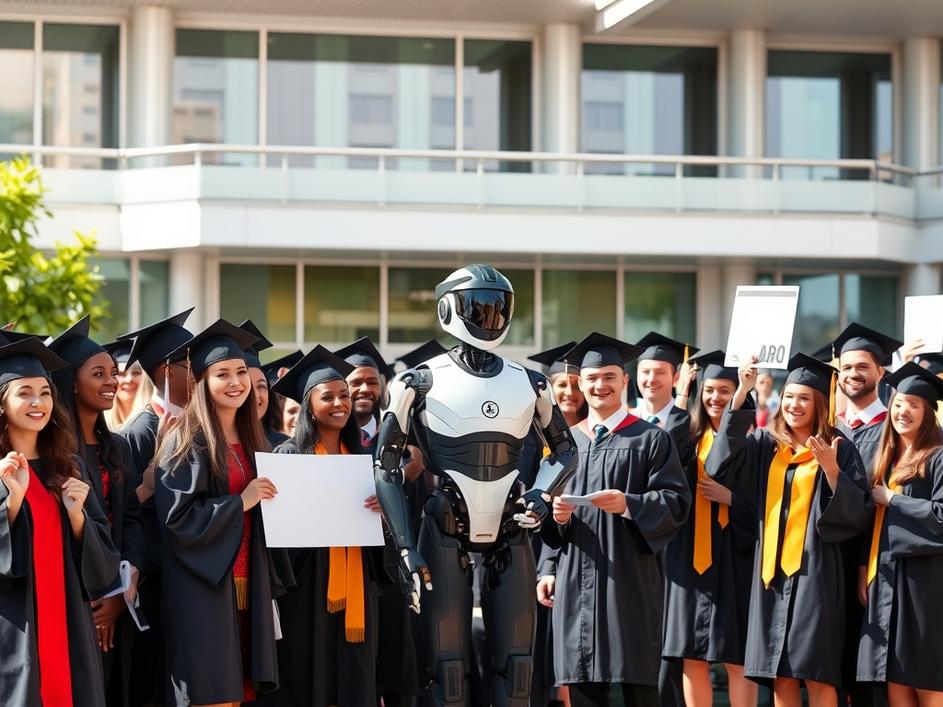
ToggleGraduations are supposed to feel like a clean break. You hear speeches about hope, you toss your caps, you smile for pictures. This year, a few campuses turned that ritual into a protest stage. Graduates at several U.S. universities rose to their feet and shouted boos when invited speakers praised artificial intelligence. The noise was loud enough to be captured on viral video clips that spread across social media. For many of these young adults, the reaction was not a joke or a moment of teenage rebellion. It was a signal that a generation is waking up to the fact that the tech they grew up with might also be shaping their future in ways they cannot control. The scene shows a clash between the old guard’s optimism about AI and a cohort that feels left out of the conversation.
At the University of Arizona, a former Google CEO took the podium to celebrate what he called a “new era of intelligent machines.” He spoke about how AI could solve climate change, create new jobs, and boost the economy. Before he could finish, a wave of boos rose from the audience. Similar scenes unfolded at schools in California and Texas, where guest speakers from tech firms and venture capital firms received the same reaction. The students didn’t just clap and smile; they held up signs that read “AI is not a miracle” and “Teach us, not just sell us.” The moments were captured by journalists and quickly turned into memes. The pattern is clear: the same generation that grew up with smartphones and TikTok now questions whether the next big thing, AI, will actually help them or just add another layer of uncertainty.
What lies beneath the noise is a set of concrete worries. First, there is the fear of jobs disappearing. AI tools can write code, draft copy, and even create art, and many students see headlines about factories shutting down or offices shrinking. Second, privacy feels more fragile than ever. Algorithms track every click, every swipe, and students wonder who owns that data and how it will be used later. Third, bias is a daily reality. When AI systems misclassify faces or recommend unfair loan terms, the impact hits real people, often from marginalized groups. Finally, there is a sense that decisions about AI are being made in boardrooms far away from campus lawns. Young people want a seat at the table, not just a seat in the crowd.
Tech leaders love to paint AI as a magic wand that will solve everything. They talk about self‑driving cars, flawless medical diagnoses, and endless productivity gains. The reality, however, is messier. Current models still make simple mistakes, they need massive amounts of data, and they can be fooled by tiny changes in input. The hype often glosses over the cost of training these systems—energy use, data collection, and the need for specialized talent. When the glitter fades, the gaps become obvious: not every industry can adopt AI overnight, and not every job will be enhanced by it. The disconnect between the polished presentations and the on‑the‑ground experience fuels the skepticism we see on graduation stages.
If universities want to keep pace with student concerns, they need to move beyond guest lectures that glorify AI. Courses should teach how the technology works, its limits, and its ethical implications. Students should be invited to design policies, not just consume products. Companies can start by being transparent about how their models are trained and what data they use. Governments could create clearer regulations that protect privacy and require bias audits. Most importantly, there should be a two‑way dialogue: young people bring fresh perspectives, and adults provide the context to turn those ideas into responsible action.
The booing at commencement is more than a moment of drama; it is a warning sign. It tells us that a generation is ready to question, to demand answers, and to shape the future of AI on its own terms. Ignoring that signal would be a mistake. By listening, educating, and collaborating, we can turn the current tension into a chance for smarter, fairer development of artificial intelligence. The next wave of graduates will inherit the tools we build today, and they deserve to inherit a system that works for them, not against them.
Source: Original Article



Comments are closed