

We are a digital agency helping businesses develop immersive, engaging, and user-focused web, app, and software solutions.
2310 Mira Vista Ave
Montrose, CA 91020

2500+ reviews based on client feedback
What's Included?
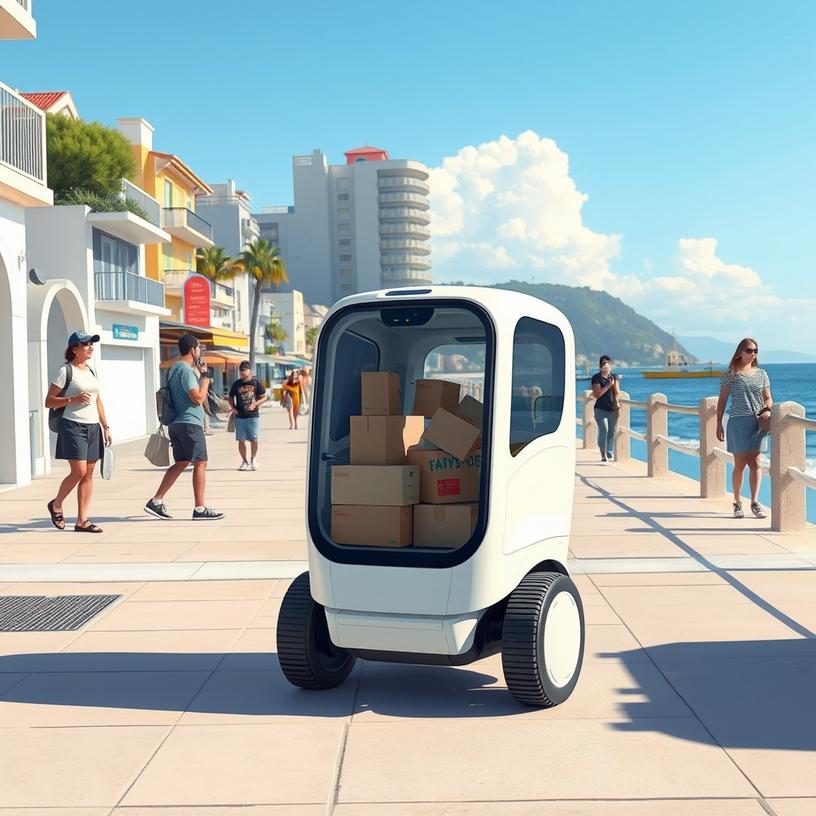
ToggleImagine stepping out of your house in Bournemouth, pulling out your phone, and watching a small, box‑shaped robot glide silently down the pavement to your doorstep. That scene is about to become a regular sight in three coastal towns – Bournemouth, Christchurch and Poole – where a pilot program will test autonomous grocery delivery robots. The idea is simple: a fleet of electric, driver‑less vehicles will pick up orders from local supermarkets and travel straight to customers’ homes, all without a human behind the wheel. The project is being rolled out by a partnership of local councils, a tech start‑up and a regional retailer, each hoping to prove that the concept works in real life, not just in a lab. If the trial goes well, the streets could soon be dotted with these quiet couriers, offering a fresh alternative to traditional van deliveries.
The robots rely on a mix of sensors, cameras and GPS to navigate sidewalks, avoid obstacles and follow traffic rules. Lidar units scan the environment in 3D, while short‑range radar spots moving objects like cyclists or pets. A central software platform stitches the data together and decides the best route, updating in real time if a construction barrier pops up. Because the vehicles are fully electric, they run on a modest battery that can cover a day’s worth of trips before needing a quick recharge at a depot. The design is compact enough to fit through standard doorways, yet sturdy enough to protect groceries from rain or bumps. Engineers have also added a simple lockable compartment that only the recipient can open with a code sent to their phone.
At first glance, the robots look like they might take jobs away from delivery drivers, but the reality is more nuanced. The pilot creates new roles in vehicle maintenance, fleet coordination and software monitoring that didn’t exist before. Small retailers get a chance to reach customers who might otherwise skip a trip to the shop, potentially boosting sales. For the councils, the program promises less traffic congestion and lower emissions, aligning with broader climate goals. Some residents have already expressed excitement about the idea of fewer noisy vans on their streets, especially in quiet residential areas. Overall, the economic ripple effect could be positive if the community embraces the technology and the new jobs are filled by local workers.
For a shopper, the biggest draw is convenience. No need to wait for a human driver to arrive or to coordinate a specific time slot; the robot can appear within a narrow window that fits your schedule. The ordering process is handled through a straightforward app where you select items, pay, and receive a tracking link. When the robot arrives, a soft chime alerts you, and you simply type the code to unlock the compartment. The whole interaction takes only a few minutes, and you avoid the hassle of carrying heavy bags up stairs. Early testers have reported that the novelty factor also adds a bit of fun to the routine – it feels like having a small, friendly helper on the street.
Despite the optimism, there are several hurdles to clear before the robots become a common sight. Safety is the top priority; the vehicles must prove they can reliably detect and react to unpredictable human behavior, especially in busy tourist spots. Regulators are still figuring out the right set of rules for driver‑less machines on public sidewalks, and any misstep could lead to a backlash. Privacy‑savvy citizens worry about the cameras constantly scanning the neighborhood, even if the footage is stored anonymously. There’s also the question of accessibility – not everyone has a smartphone or feels comfortable using a digital lock. Addressing these issues will require transparent communication and perhaps some compromises, such as offering a manual pick‑up option alongside the robot service.
If the trial in Bournemouth, Christchurch and Poole shows that the robots can operate safely, reliably and at a price that makes sense for retailers, other towns are likely to follow suit. The technology is still evolving, and improvements in battery life, AI perception and cost efficiency will make the service more attractive over time. More importantly, the experiment will give policymakers real‑world data on how autonomous delivery fits into existing urban infrastructure. Whether the streets will soon be filled with these quiet couriers or whether they will remain a niche experiment depends on how well the community, businesses and regulators can work together. Either way, the pilot marks a clear step toward a future where everyday errands are handled by machines, freeing people to spend time on things that matter more to them.
Source: Original Article



Comments are closed