

We are a digital agency helping businesses develop immersive, engaging, and user-focused web, app, and software solutions.
2310 Mira Vista Ave
Montrose, CA 91020

2500+ reviews based on client feedback
What's Included?
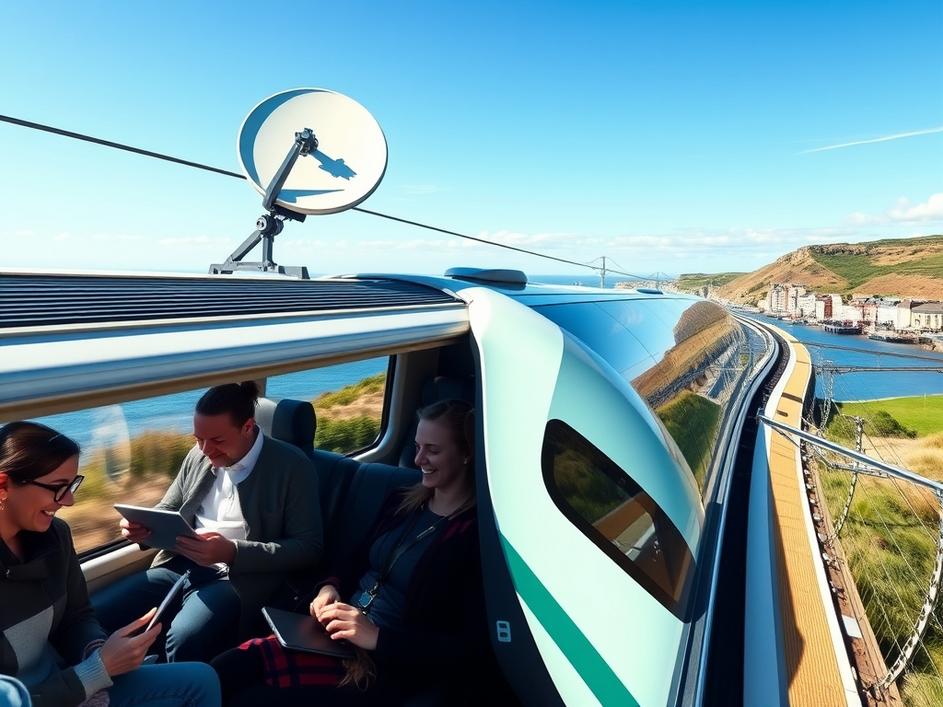
ToggleBudget rail operator in the UK has just announced a plan that could change the daily commute for thousands of passengers. Starting later this year, every carriage on its East Coast services will be equipped with Starlink satellite internet. The move comes at a time when reliable connectivity on trains is still a rare luxury. For many commuters, the train ride is the only window to answer emails, stream a podcast, or simply stay in touch with family. By installing a network that was originally built for remote villages and ships, the rail company hopes to turn that window into a clear, fast pane of glass. It’s a bold step for a budget brand that usually focuses on low fares rather than high‑tech extras, and it signals that passenger expectations are shifting fast.
Most people today think of a train ride as a place to read, work, or relax. Without a solid connection, those plans fall apart. The current Wi‑Fi on many UK trains is slow, drops often, and can’t handle video calls. That means a commuter who needs to join a Zoom meeting or a student trying to download a lecture file is left frustrated. The lack of reliable service also hurts the rail operator’s reputation. In a world where mobile data plans are costly and coverage can be spotty along the coastline, a dependable on‑board network becomes a real selling point. It can turn a boring hour of travel into productive time, and that value is something passengers are willing to notice – and even pay for if the price is right.
Starlink uses a constellation of low‑earth‑orbit satellites that circle the planet every 90 minutes. Each satellite beams internet down to a small dish that tracks them automatically. For a train, the dish is mounted on the roof and linked to an antenna system that can swivel as the train speeds along the tracks. Because the satellites are so close to Earth, latency is low and speeds can reach 100 Mbps or more in ideal conditions. This is a big jump from the 4G‑based systems many rail companies still rely on. The technology also means coverage can stay strong even in remote coastal stretches where ground‑based towers are sparse. In practice, passengers could stream a video or download a large file without the usual buffering that plagues current services.
Installing a satellite dish on every carriage is not cheap. The hardware, installation, and ongoing subscription fees add up, especially for a budget operator that keeps fares low. There are also technical hurdles: the dish must stay stable while the train sways, and it needs to avoid interference from tunnels, bridges, and tall trees. Weather can affect signal strength, though Starlink’s design mitigates rain fade better than older satellite systems. The rail company will have to train staff to maintain the equipment and troubleshoot issues on the move. All these factors could push the cost per passenger higher, and the company will need to balance that against the potential boost in ticket sales and brand perception.
The move could set a new benchmark for other train operators across the UK. If passengers start to expect fast, reliable Wi‑Fi as a standard feature, companies that lag behind may lose market share. It also puts pressure on the government and regulators to think about digital infrastructure as part of transport policy. On the other hand, a successful rollout could inspire more partnerships between rail firms and tech providers, leading to innovations like real‑time journey updates, predictive maintenance alerts, and even on‑board entertainment platforms. The ripple effect might be a more connected, data‑rich rail ecosystem that benefits both travelers and operators.
Bringing Starlink internet to the East Coast trains is a gamble, but it feels like a sensible one. The rail operator is betting that the extra cost will be offset by happier passengers and a stronger brand image. For commuters, it could mean turning a dull commute into a productive part of the day. For the rail industry, it could be a signal that digital services are as important as punctuality and price. Only time will tell if the satellite connection lives up to the hype, but the effort itself shows that even budget railways are willing to invest in technology that matters to their riders. In the end, a faster connection might just be the ticket to a smoother travel experience for everyone.
Source: Original Article


Comments are closed