

We are a digital agency helping businesses develop immersive, engaging, and user-focused web, app, and software solutions.
2310 Mira Vista Ave
Montrose, CA 91020

2500+ reviews based on client feedback
What's Included?
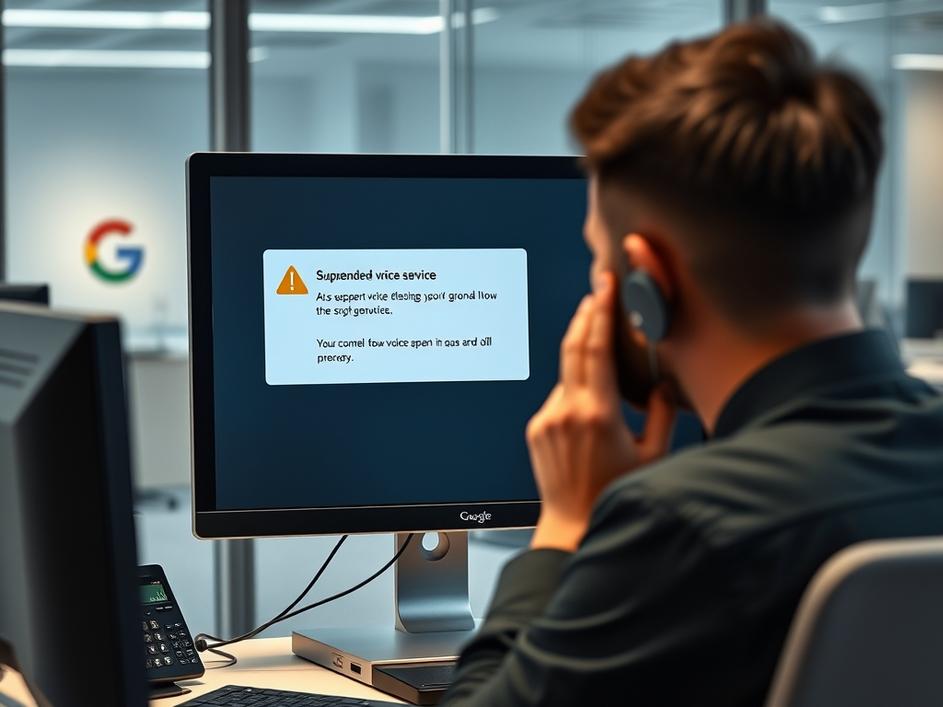
ToggleOn a recent Tuesday, many Google Workspace users woke up to a strange message: their GVoice service had been suspended. The suspension wasn’t a policy decision or a billing issue. It was an error that left users unable to export data, move their numbers to another carrier, or even forward incoming texts. In short, the core features that keep a business phone line functional were suddenly locked behind a wall that wasn’t supposed to be there.
The Google Workspace Status Dashboard listed the incident under a cryptic title: “GVoice suspended in error: no Takeout, portout, incoming text forwarding blocked.” That description tells the story in three parts. First, “no Takeout” means users could not download their voice data or call logs. Second, “portout blocked” stopped anyone from moving their phone number to a different provider – a critical step for companies that need flexibility. Finally, “incoming text forwarding blocked” cut off the ability to route text messages to other devices, which many teams rely on for customer support.
For small businesses that run their entire client communication through GVoice, the impact was immediate. Sales reps could no longer receive leads via text, support agents lost a channel for troubleshooting, and managers couldn’t pull call records for performance reviews. Larger enterprises faced compliance headaches because the inability to export call logs made it harder to meet audit requirements. The problem wasn’t just inconvenience; it threatened revenue streams and could have exposed companies to legal risk.
Google’s first line of communication was the Workspace Status Dashboard, which listed the incident and provided a link to a FAQ. The FAQ directed users to contact support for more information. While the dashboard is a useful tool for tracking service health, it offered little in the way of a timeline or root‑cause explanation. Support tickets were the only way to get personalized answers, and many users reported long wait times. The lack of proactive updates left a lot of people guessing about when the issue would be fixed.
From a technical standpoint, a suspension like this often stems from automated systems that flag accounts for unusual activity. In a world where billions of actions happen every day, Google relies on algorithms to protect users from fraud and abuse. Unfortunately, those same algorithms can generate false positives, especially when a new feature roll‑out changes usage patterns. A mis‑configured rule or a timing glitch in the backend could have mistakenly marked healthy accounts as suspicious, triggering the blanket suspension.
This incident is a reminder that even the biggest tech giants can have hiccups that ripple through thousands of businesses. When a core communication tool is hosted entirely in the cloud, you lose a layer of direct control. That’s why many IT leaders advocate for a hybrid approach: keep critical data backups on‑premises and use multi‑factor authentication to reduce the chance of automated lockouts. The GVoice glitch shows that redundancy isn’t just a nice‑to‑have; it’s becoming a necessity.
If you rely on GVoice or any similar service, start by setting up regular data exports. Google Takeout can be scheduled to run weekly, ensuring you have a recent copy of call logs and messages. Consider porting a secondary number to a different carrier as a fallback; this way, if forwarding fails, you still have a reachable line. Finally, keep an eye on the Workspace Status Dashboard and subscribe to email alerts so you hear about outages the moment they’re reported.
Trust between a service provider and its customers is built on clear communication. In this case, Google’s brief dashboard note and a generic FAQ fell short of what many users needed. A timeline, an estimate for resolution, and a post‑mortem analysis would have gone a long way toward restoring confidence. When large platforms acknowledge mistakes openly, they turn a negative experience into a learning moment for both sides.
Google has since indicated that the suspension was lifted and that normal functionality is returning. Early reports suggest that most users have regained access to Takeout, porting, and text forwarding. The real question is whether the company will use this incident to improve its detection algorithms and its communication strategy. For businesses, the takeaway is to stay vigilant, maintain backups, and keep an eye on service health dashboards. In a world where digital tools are the backbone of daily operations, a little extra preparation can make the difference between a minor hiccup and a major disruption.
Source: Original Article



Comments are closed