

We are a digital agency helping businesses develop immersive, engaging, and user-focused web, app, and software solutions.
2310 Mira Vista Ave
Montrose, CA 91020

2500+ reviews based on client feedback
What's Included?
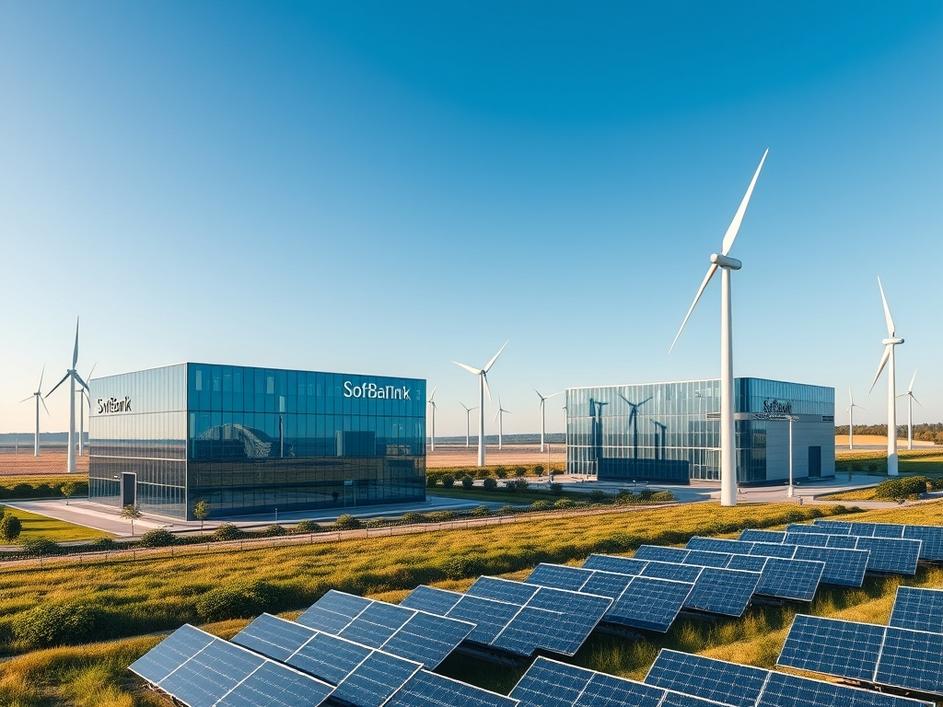
ToggleSoftBank’s latest announcement has turned heads across Europe. The Japanese conglomerate said it will pour up to €75 billion – roughly $87 billion – into building a network of data centers in France. The plan calls for up to five gigawatts of power capacity, enough to run thousands of servers around the clock. For a company that has long been associated with venture capital and telecom, this is a bold step into the physical infrastructure that fuels the digital economy. In this post I’ll break down what the move means for France, for the broader cloud market, and for the future of data‑intensive technologies.
France offers a mix of factors that make it attractive for massive compute farms. Its power grid is already heavily decarbonized, and the country is investing heavily in offshore wind and solar. The regulatory environment is also becoming more friendly to large‑scale data projects, with tax incentives aimed at tech infrastructure. Add to that a central location in Western Europe, solid fiber networks, and a skilled engineering workforce, and you have a recipe that aligns well with SoftBank’s ambition to build a resilient, low‑cost compute backbone.
Putting €75 billion on the table is not a casual spend. It translates to roughly €15 billion per gigawatt of capacity, a figure that dwarfs most previous European data‑center deals. SoftBank says the investment will fund up to five gigawatts of power, enough to host several hundred thousand racks. That scale would put the French sites among the largest single‑country data‑center footprints in the world, rivaling the biggest campuses in the United States and Asia.
Europe has long relied on U.S. giants like Amazon, Microsoft, and Google for cloud services. A home‑grown, SoftBank‑backed infrastructure could give European businesses more choices and potentially better data‑sovereignty guarantees. It also pressures existing players to up their game on pricing, latency, and sustainability. If the French sites deliver on performance, we might see a new wave of startups and enterprises opting for a locally hosted cloud, which could reshape the continent’s digital supply chain.
One of the biggest concerns with data centers is their energy appetite. SoftBank’s plan explicitly ties the gigawatt capacity to renewable sources, aiming for a carbon‑neutral operation by the mid‑2030s. The company is already partnering with French renewable developers to secure long‑term power purchase agreements. If they pull it off, the French sites could become a benchmark for how massive compute can coexist with aggressive climate goals, setting a standard for future projects worldwide.
Beyond the servers, the construction phase alone will create tens of thousands of jobs, from civil engineers to electricians. Once the facilities are up, a steady stream of technical roles will emerge, ranging from data‑center operators to AI researchers. The investment also promises to attract ancillary businesses—cooling technology firms, networking equipment suppliers, and even academic labs looking for high‑performance compute. In short, the ripple effect could turn regions around the sites into tech hubs.
Building such massive infrastructure is not without challenges. Land acquisition, especially in densely populated areas, can be a bureaucratic nightmare. Supply‑chain bottlenecks for specialized cooling equipment and high‑density racks could delay timelines. Moreover, competition from existing European data‑center operators means SoftBank will need to price aggressively while maintaining service quality. Navigating these hurdles will test the company’s project‑management chops as much as its financial muscle.
SoftBank’s move fits a larger strategy of diversifying into real‑world assets that support its AI and fintech ventures. As generative AI models demand ever‑greater compute, owning the underlying hardware becomes a strategic advantage. By controlling a chunk of the European compute supply, SoftBank can offer preferential rates to its portfolio companies, creating a closed loop of value creation that extends far beyond the data‑center walls.
The €75 billion French data‑center project is more than a headline‑grabbing number. It signals a shift toward localized, sustainable, and vertically integrated compute infrastructure in Europe. If SoftBank delivers on its promises, the ripple effects could be felt in everything from cloud pricing to climate‑friendly tech policy. For now, the world will be watching the ground break in France, waiting to see whether this ambitious bet reshapes the digital map of the continent.
Source: Original Article

Comments are closed