

We are a digital agency helping businesses develop immersive, engaging, and user-focused web, app, and software solutions.
2310 Mira Vista Ave
Montrose, CA 91020

2500+ reviews based on client feedback
What's Included?
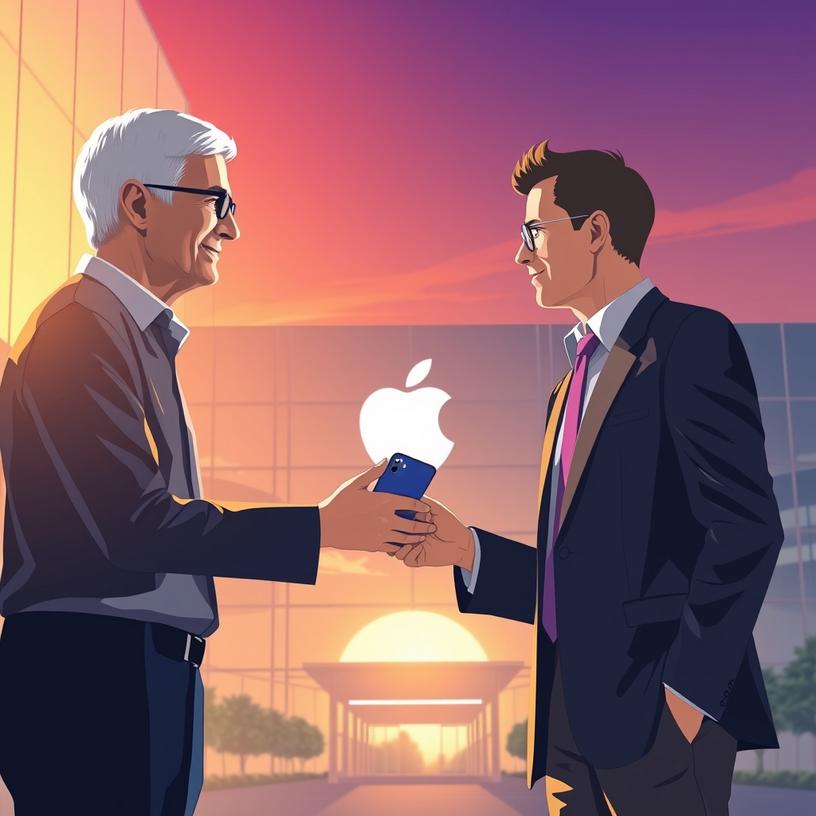
ToggleTim Cook walked away from the CEO desk on September 1. After fifteen years he moved to an executive chairman role. The change is official and it feels big for the tech world. The man who helped turn a garage idea into a trillion-dollar brand is now handing the daily grind to John Ternus. Ternus has spent most of his career on the hardware side. He ran the iPhone and Mac teams and earned a reputation for steady delivery. The shift signals a move toward continuity rather than a radical overhaul. It also puts a fresh face at the front of a company that many still see as Cook’s creation. The question now is how the new leader will shape the next phase.
John Ternus is not a stranger to Apple’s core products. He helped launch the iPhone 12 line and oversaw the transition to Apple Silicon in Macs. Those projects showed he can manage large, complex engineering efforts. He is known for being detail-oriented and for keeping teams focused on quality. That background could be a good match for a company that prides itself on design and reliability. At the same time, Ternus does not have a public record of leading AI research or software services. That gap may become a point of tension as Apple tries to catch up with rivals that already have strong AI portfolios. Still, his hardware pedigree could give him a solid platform to build on, especially if he leans on existing talent in the AI division.
Apple has talked about AI a lot in recent years. It rolled out on-device features, added generative tools to its apps, and hinted at a larger vision for personal assistants. But the market still wonders whether those moves are enough to compete with firms that have built AI into the core of their products. Ternus inherits a situation where the technology is promising but not yet proven in the eyes of many investors. The company’s AI projects need clear milestones and visible results. Without a bold, public roadmap, Apple risks being seen as a follower rather than a leader. Ternus will have to decide whether to double down on internal research, partner with outside labs, or acquire a startup that can give the brand a quick boost. Each option carries risk and cost, and the right choice will shape Apple’s relevance in the AI era.
Even though Cook stepped down, his influence does not disappear overnight. As executive chairman he still sits at the top of the board and can steer strategy. The board is likely to expect a smooth transition and steady earnings growth. They also want to see Apple stay ahead in emerging tech. That creates a delicate balance for Ternus. He must respect the legacy of a leader who built a culture of secrecy and meticulous execution, while also showing he can inject fresh energy. The board’s patience may wear thin if AI progress stalls. At the same time, shareholders are accustomed to seeing strong quarterly numbers, so any dip in revenue could trigger criticism. Ternus will need to manage both internal expectations and external pressure without losing focus on product quality.
The news of Cook’s departure sparked a quick move in the stock market. Apple shares dipped a few percent on the day, reflecting uncertainty about the new leadership. Analysts pointed out that Ternus is a safe choice, but not necessarily a visionary for AI. Some investors see the change as a chance for a fresh perspective, while others worry about a possible slowdown in innovation. Over the following weeks, the stock recovered as earnings reports showed the usual strength in iPhone sales and services revenue. Still, the conversation around Apple’s AI roadmap remains a hot topic on forums and earnings calls. The market will keep watching how quickly the company can turn AI ideas into products that people actually use.
For Ternus, success will probably be measured in three ways. First, the continued flow of solid hardware launches that keep Apple’s profit margins high. Second, visible progress on AI that moves beyond small features and becomes a selling point for new devices. Third, a smooth cultural shift that lets the company stay agile while preserving its core values. If he can deliver a new iPhone line that feels fresh, launch a Mac with AI-enhanced capabilities, and roll out a service that shows real AI value, the critics will quiet down. If those pieces fall short, the brand may start to look dated compared with faster-moving rivals. The next few years will be a test of how well a hardware-focused leader can guide a company into an AI-first world.
Source: Original Article


Comments are closed