

We are a digital agency helping businesses develop immersive, engaging, and user-focused web, app, and software solutions.
2310 Mira Vista Ave
Montrose, CA 91020

2500+ reviews based on client feedback
What's Included?
ToggleTesla has filed a trademark application for the phrase “Amazing Abundance”. The move is more than a legal filing; it hints at a broader strategy that stretches far beyond electric cars. In recent months the company has been vocal about accelerating its artificial intelligence and robotics programs. By registering a phrase that evokes plenty and prosperity, Tesla seems to be preparing the public for products that promise to make life easier on a large scale. The timing lines up with the rollout of the latest version of its Dojo supercomputer and the upcoming prototype of the humanoid robot that the company calls Optimus. While the trademark itself does not guarantee a new product, it does give a window into how the leadership wants the brand to be perceived in the next decade.
A trademark is a signal to investors, partners and regulators. “Amazing Abundance” carries a hopeful tone that contrasts with the more technical language Tesla usually uses. It suggests a future where technology supplies more of what people need without the usual scarcity. This could be a way to frame upcoming AI services—like autonomous ride‑hailing, home assistance, or even factory automation—as tools that increase overall well‑being rather than just profit machines. The phrase also fits Elon Musk’s public statements about creating a “future that is good for humanity”. By anchoring the brand to a concept of abundance, Tesla may be trying to pre‑empt criticism that its AI work could lead to job loss or privacy concerns. In short, the name is a piece of narrative engineering.
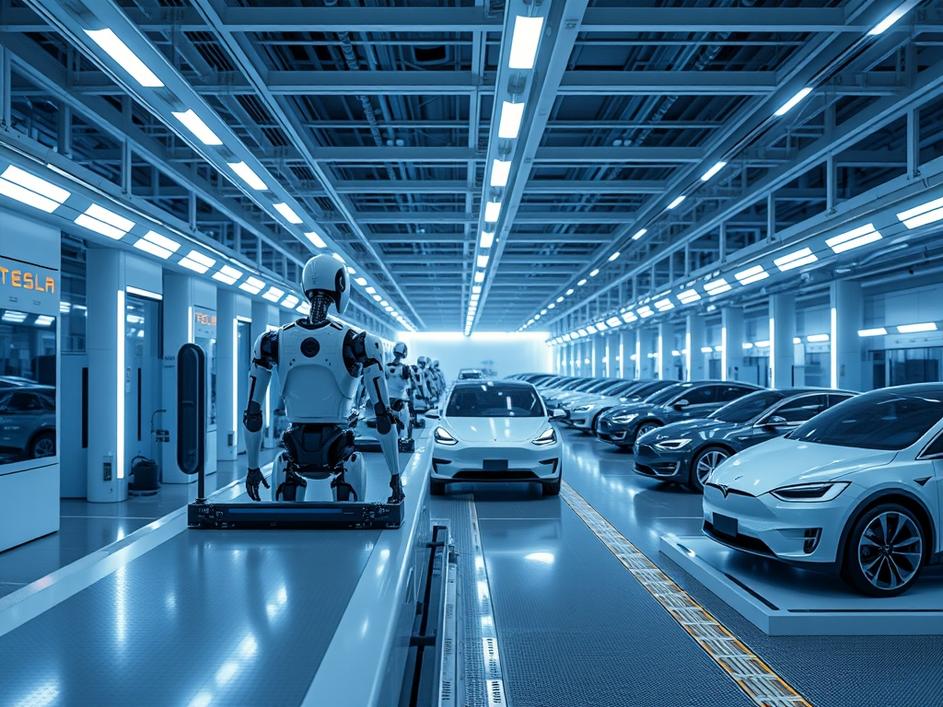
Behind the glossy headlines, Tesla’s AI work is rooted in massive data collection from its fleet of cars. The Dojo supercomputer, now in its third generation, processes petabytes of sensor data to train neural networks that can drive without a human behind the wheel. Those same networks are being repurposed for the Optimus robot, allowing it to recognize objects, navigate cluttered spaces and learn new tasks through imitation. Recent internal demos show the robot lifting boxes, assembling simple parts and even responding to voice commands. The company says the robot will start in controlled environments like factories before moving into homes and offices. If the AI models can truly share knowledge across vehicles and robots, the result could be a unified intelligence that improves itself continuously.
Tesla’s original claim to fame was electric vehicles, but the hardware expertise it has built—battery packs, power electronics, high‑speed actuators—translates well to robotics. The Optimus platform uses the same motor technology that powers the Model Y, and the battery packs are scaled to give several hours of operation on a single charge. By using existing supply chains, Tesla can keep costs down while scaling production. The company has hinted at using the robot for tasks such as warehouse sorting, grocery stocking and even home cleaning. If those plans materialize, we could see a shift where a single manufacturer supplies both transportation and physical labor solutions, blurring the line between mobility and service industries.
Investors have responded to the trademark news with a modest bump in Tesla’s stock, reflecting optimism that new revenue streams are on the horizon. However, the move also draws attention from regulators who are still figuring out how to oversee AI‑driven machines. Autonomous driving already faces a patchwork of state‑level rules, and adding humanoid robots to the mix could raise questions about safety standards, liability and data privacy. Competitors such as Amazon’s robotics division and Google’s DeepMind are also racing to commercialize similar technologies. Tesla’s ability to integrate AI across its product line could give it a competitive edge, but it must navigate legal hurdles and public perception carefully.
If Tesla succeeds in turning “Amazing Abundance” into a reality, the impact could be subtle at first. A driver‑less car that drops you off and heads back to charge could free up commuting time. A robot that helps with repetitive warehouse work could lower product prices and reduce physical strain on workers. Over time, the combined effect might be a modest increase in convenience and a slight reduction in labor‑intensive tasks. That is the promise behind the trademark—a future where technology supplies more of what we need, without the constant feeling of shortage. Whether Tesla can deliver on that promise remains to be seen, but the trademark filing shows the company is serious about shaping the narrative now.
Source: Original Article

Comments are closed