

We are a digital agency helping businesses develop immersive, engaging, and user-focused web, app, and software solutions.
2310 Mira Vista Ave
Montrose, CA 91020

2500+ reviews based on client feedback
What's Included?
ToggleWhen a 3D printer finishes a job, it often leaves behind bits of filament that never made it into the final shape. Those stray strands, support structures and failed prints pile up in a drawer. Most hobbyists toss them in the trash, assuming they’re too mixed up to use again. In reality, the plastic is still there, just in a broken form. The problem isn’t the material itself, but the lack of a simple way to turn those leftovers into something useful again.
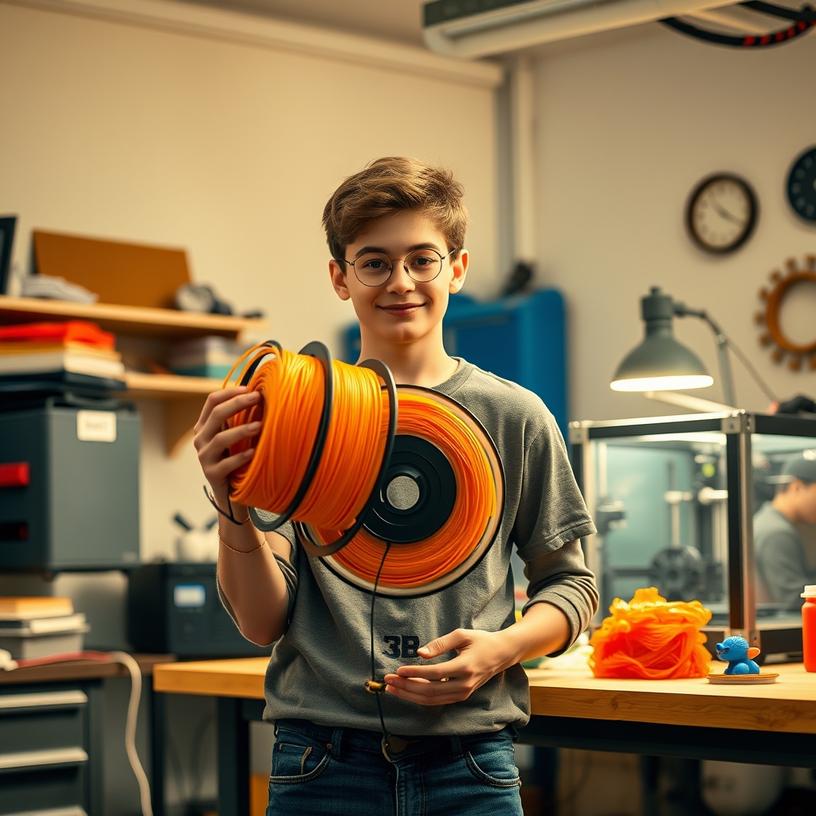
Benjamin Davis, a 16‑year‑old from Massachusetts, saw that problem as a chance to tinker. He’s the kind of kid who spends weekends in his garage, surrounded by soldering irons and spare parts. When his school’s robotics club talked about sustainability, Benjamin asked a simple question: can we recycle the plastic that our own printers throw away? Instead of waiting for an answer, he decided to build one himself.
Benjamin’s device is essentially a small‑scale recycling line. First, it shreds the filament scraps into tiny pieces using a rotary cutter. Those pieces then go into a heated chamber where they melt just enough to become pliable. A second screw pushes the molten plastic through a nozzle, forming a fresh filament strand that can be spooled and fed back into a printer. The whole process takes under an hour for a kilogram of waste, and it runs on a standard household power outlet.
After a regional science fair, Benjamin entered his prototype in a national competition that offers a $75,000 prize for innovative student projects. He won, and the award will cover the cost of refining the machine and making a few more units for local schools. The recognition also puts a spotlight on the idea that young people can solve real‑world problems with modest resources. It’s a reminder that a good idea doesn’t need a big lab to get off the ground.
Many high schools now have 3D printers, but they rarely have a plan for the waste they generate. Benjamin’s system could change that. By installing a small recycling unit in a maker space, teachers can turn a cost center into a learning tool. Students can watch the whole life cycle of a plastic part, from raw filament to printed object to recycled strand. That hands‑on experience reinforces concepts in engineering, chemistry and environmental stewardship all at once.
The prototype works well with the most common PLA filament, but other materials like ABS or PETG behave differently when melted. Benjamin is already testing temperature controls and nozzle designs to handle those polymers. He also needs to improve the consistency of the output filament so it doesn’t break during printing. Scaling up is another hurdle – a larger machine would be useful for community workshops, but it must stay affordable.
Seeing a teenager turn a classroom problem into a functional solution feels refreshing. It shows that sustainability doesn’t always start with big corporations; it can begin with a curious mind and a handful of tools. The project also highlights the power of hands‑on learning. When students build something that directly addresses a waste issue they see every day, the lesson sticks far longer than a textbook explanation.
If more schools adopt Benjamin’s design, a network of small recycling hubs could emerge. Imagine a district where each maker lab feeds its own filament back into the system, reducing the need to buy new spools. On a larger scale, community centers could collect 3D‑printer waste from hobbyists and run a shared recycler. The model could even inspire commercial versions that serve small businesses, creating a loop that keeps plastic in use rather than in landfills.
Benjamin’s invention is a reminder that the biggest environmental wins often start with the smallest steps. Turning a pile of failed prints into fresh filament isn’t just a clever hack; it’s a practical way to teach responsibility and ingenuity. As more people see the value in reusing what they already have, the habit of waste becomes less automatic. If a 16‑year‑old can build a machine that saves money and cuts trash, imagine what a whole generation of makers could achieve.
Source: Original Article


Comments are closed